Dental Botox® for TMD Pain Relief
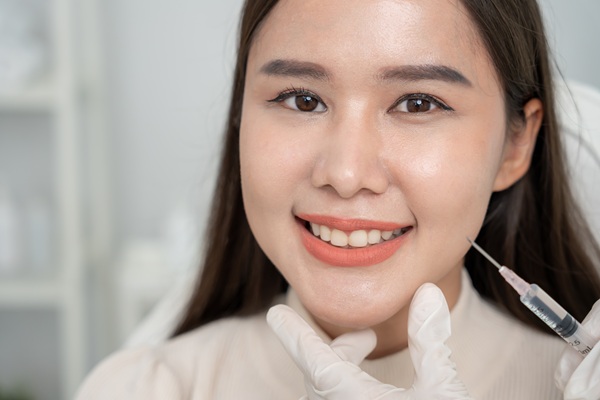
Dental Botox® is an alternative treatment approach for TMJ disorder and related pain and jaw tension. The treatment entails injecting Botox into the facial muscles causing the pain and soreness. The injection can also alleviate headaches caused by teeth grinding and a locked jaw. This article talks about the use of dental Botox® for relieving TMJ pain.
Treating TMJ pain and jaw tension with dental Botox®
The temporomandibular joint (TMJ) is positioned on both sides of the head, where the jawbone connects with the skull. The TMJ enables eating, swallowing, talking, and other routine activities that involve the mouth. If the joint becomes dislocated or stressed due to excessive teeth grinding, the patient may experience severe tension headaches and sharp pains around the jaw. Botox relieves the tension in the jaw by relaxing the muscles, thus preventing powerful, usually unintentional movement of the jaw.
The Botox treatment approach for TMJ pain relief is typically fast, straightforward, and effective. The procedure is non-surgical and minimally invasive. The injection will be administered in the dental office and performed on an outpatient basis. Most patients observe remarkable improvement after about a day or two following treatment, but complete relief may take about a week.
What to expect
The duration of dental Botox treatment depends on the required number of injections. However, the treatment procedure can be finished in about 10 to 30 minutes. Only the muscles that are injected will become relaxed. Botox for TMJ treatment will not affect any other part of the body. The dentist will usually inject the temporalis, masseter, frontalis muscles, with the inclusion of other injection sites depends on the severity of the pain and headaches.
The procedure is mostly painless, and the only discomfort might be from the injection, which is usually minor and brief. Patients sometimes describe the Botox injection pain as a prick or bug bite. The dentist can reduce the pain from the injection by using a local anesthetic or cold pack to numb the area. Patients who are scared of the needle need to inform the dentist.
After the treatment, the muscle pain and tenderness should start to diminish almost immediately. Since the treatment is non-invasive and non-surgical, patients can quickly return to their routine soon enough. However, patients need to avoid rubbing or massaging the injection site to prevent the Botox from spreading to other muscles. They also need to reduce physical activity for a while.
Aftercare and risks
The results of Botox treatment can last up to five months, so it is advisable to undergo regular treatment to prevent the pain from returning. Due to the non-invasive nature of the treatment, the risks are minimal. However, some patients may react harshly to the injections and experience symptoms such as headaches, nausea, and muscle weakness, but these usually stop within one week after treatment.
Do you suffer from TMJ disorder?
When patients opt for dental Botox®, the dentist will examine their condition to know whether they are eligible for the procedure. The use of Botox® for TMD pain relief has been shown to be effective. To learn more about the procedure, book an appointment today to get started.
Request an appointment here: https://www.mypearldental.com or call Pearl Dental Group Specialty & General Dentistry at (760) 560-3169 for an appointment in our Vista office.
Check out what others are saying about our dental services on Yelp: Botox in Vista, CA.
Related Posts
Root canal treatment becomes necessary when the soft tissue inside a tooth, called the pulp, becomes inflamed or infected. This problem often develops after deep decay, a crack, repeated dental work, or trauma. A general dentist can evaluate symptoms early and recommend next steps that relieve pain and protect the natural tooth.A persistent toothache that…
A full mouth reconstruction rebuilds the bite, teeth, and gum health to restore comfortable function and appearance. Patients consider full mouth reconstruction when multiple teeth suffer from decay, fractures, wear, or loss. The process combines restorative and cosmetic dentistry to improve chewing, speech, and jaw balance. Because the mouth works as a system, addressing several…
A dental crown is a common restoration that provides essential protection and structural support for damaged or weakened teeth. Over time, even the most durable dental crown can experience wear, misalignment, or develop issues that compromise your oral function and health. Here are five signs that indicate it is time to replace or refit a…
All-on-4 dental implants offer a streamlined alternative for patients seeking a full-arch tooth replacement. This approach uses just four implants per arch to support a complete set of prosthetic teeth, delivering both functional and aesthetic improvements. Patients exploring this solution should understand what sets it apart from traditional options and what to expect during and…